
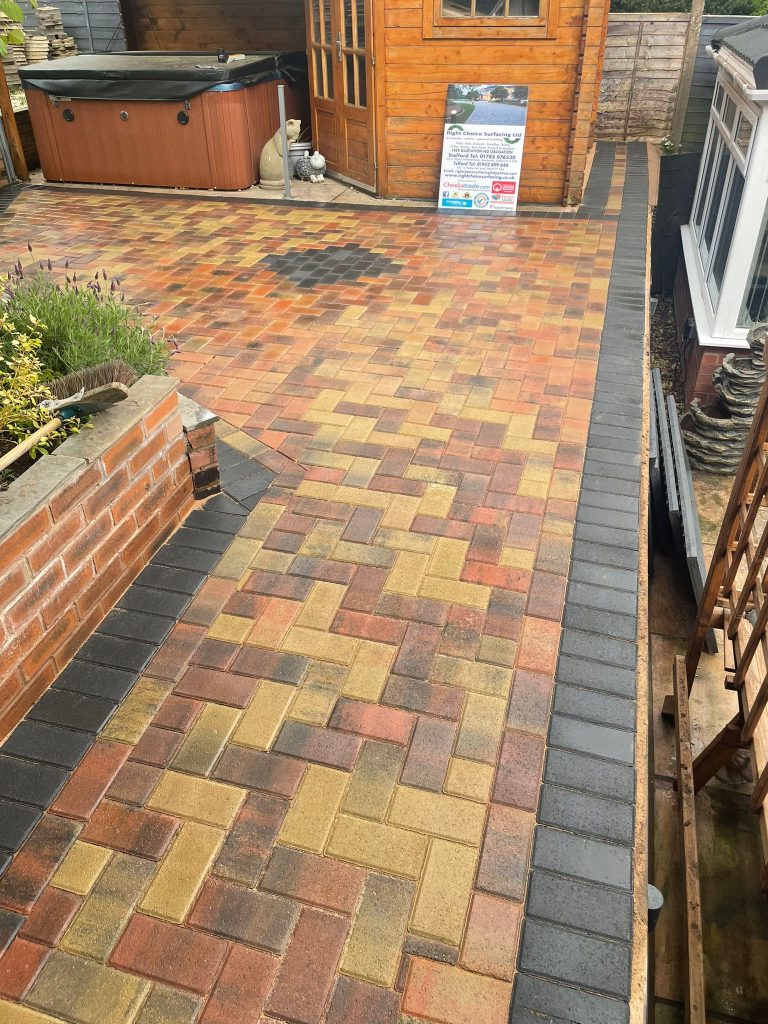
If you’re planning a new driveway in Stafford, you’re probably asking one question first: do you actually need permission from the council? The good news is that most homeowners don’t. However, a few situations do trigger the need for formal approval, and getting this wrong can cost you time and money. This guide walks you through exactly when permission applies in Stafford, what it costs, and how Right Choice Surfacing can help you avoid the hassle altogether.
What Does “Planning Permission” Actually Mean?
Planning permission is simply the council’s official sign-off before you build or change something on your property. Think of it as a safety check. Your local planning authority looks at the work to make sure it won’t cause flooding, block visibility on the road, or clash with the character of the area.
For most home projects, though, you don’t need to ask. The government allows a set of works under “permitted development rights.” This is a fancy term for a simple idea: small, sensible changes don’t need a formal application. A new driveway usually falls into this category, provided you tick a few boxes.
Drainage sits at the heart of most driveway decisions. Stafford has areas near the River Sow that already deal with surface water issues, so councils across the UK pay close attention to where rainwater goes once your garden is paved over. This is exactly why the material you choose matters more than the size of the job on its own.
The 5 Square Metre Rule Explained
Here’s the rule that decides almost every driveway case in the UK, including Stafford. Since 2008, any front garden hard surfacing over 5 square metres needs planning permission, unless the water can drain away naturally.
In practice, this comes down to your choice of surface:
- Permeable materials (gravel, permeable block paving, resin-bound stone) let rainwater soak through. These don’t need permission, regardless of size.
- Non-permeable materials (standard tarmac, poured concrete, sealed block paving) stop water soaking in. If the area is over 5m² and water runs off toward the street, you’ll need permission.
- A permeable design workaround also works. You can lay a non-permeable surface and still avoid permission, as long as the rainwater is directed to a lawn, border, or soakaway on your own land instead of the road.
So, the material you choose isn’t just a style decision. It’s the deciding factor in whether you need to fill out any paperwork at all.
When You Don’t Need Planning Permission in Stafford
Most Stafford homeowners can go ahead without contacting the council first. You’re likely in the clear if any of these apply to your project:
- You’re using a permeable surface such as gravel, permeable block paving, or resin-bound stone
- Your driveway is smaller than 5m², whatever material you choose
- Water from a non-permeable surface drains to a lawn, border, or soakaway rather than the road
- You’re resurfacing an existing driveway in a similar style and size
Resin-bound driveways deserve a special mention here. They’re fully permeable, so rainwater passes straight through into the ground below. That’s one reason they’ve become such a popular choice for Stafford homes: you get a smart, modern finish without the planning headache.
When You Do Need Planning Permission in Stafford
On the other hand, a handful of situations mean you’ll need to apply before any work starts:
- Your driveway uses a non-permeable material and covers more than 5m², with runoff heading toward the road
- You’re creating a brand-new access point onto the road, rather than using an existing one
- Your home sits within a conservation area or is a listed building
- Your property has an Article 4 Direction removing your usual permitted development rights
- The work involves removing a tree protected by a Tree Preservation Order (TPO)
If any of these sound like your situation, don’t panic. It doesn’t mean the project is off the table. It just means you’ll need council approval first, which is a straightforward process once you know the steps.
Stafford’s Local Rules You Need to Know
This is where Stafford differs slightly from a generic UK guide, and it trips up a lot of homeowners.
Stafford Borough Council vs. Staffordshire County Council
Two separate authorities are involved in Stafford driveway projects, and each handles a different part of the process. Stafford Borough Council deals with planning permission itself, covering material type, size, and conservation status. Meanwhile, Staffordshire County Council handles the road and pavement side of things, including dropped kerbs and vehicle access.
This split catches people out because they assume one phone call sorts everything. In reality, you may need to speak to both, particularly if your project involves crossing a public footpath to reach your new driveway.
Conservation Areas and Listed Buildings
Stafford has several protected areas, including parts of the town centre, where the council keeps a closer eye on visual changes to properties. If your home sits within one of these zones, or it’s a listed building, your permitted development rights are often reduced or removed entirely. Even a straightforward resurfacing job might then need permission. Therefore, it’s always worth a quick check with the Borough Council’s planning team before you order materials.
Dropped Kerbs and Vehicle Crossovers in Stafford
If your new driveway needs a dropped kerb, so you can drive from the road onto your property, that’s a separate application again. This is called a Section 184 Vehicle Access Crossing, and Staffordshire County Council manages it.
A few rules commonly apply:
- Your crossing can’t sit within 15 metres of a road junction or traffic signals.
- You need enough space on your property, ideally 6 metres, to park a car without it overhanging the pavement.
- Only one crossing per property gets approved in most cases.
- If your home is on a classified A, B, or C road, you’ll also need planning permission from Stafford Borough Council before the county council will process your dropped kerb application.
Costs vary, but homeowners typically pay in the region of £200 to £400 for the application and dig permit, plus separate contractor costs for the physical work. Because this two-step process can feel confusing, many people ask their driveway installer to manage the applications on their behalf.
How to Check or Apply for Planning Permission
Not sure where your project stands? You’ve got a few options.
First, call Stafford Borough Council’s planning department directly and describe your project. They’ll tell you plainly whether you need to apply. Second, you can check and submit applications through the government’s Planning Portal online, which covers councils across England. Finally, if you’d rather have written proof for future buyers or mortgage lenders, you can apply for a Lawful Development Certificate. This document confirms your driveway didn’t need permission, which is handy if you ever sell your home.
If you do need to apply, the council will usually ask for a site plan showing your property boundary, details of the proposed materials, and a short written statement explaining how the design manages rainwater. None of this needs to be complicated. In fact, most applications for a driveway are far simpler than applications for an extension or a loft conversion, and many go through without any objections at all.
Alternatively, you can skip the guesswork altogether. Right Choice Surfacing surveys your property, recommends a compliant material, and tells you upfront whether any application is needed before work begins.
What Happens If You Skip Planning Permission?
Building without permission when you needed it isn’t a small mistake. Stafford Borough Council can issue an enforcement notice, forcing you to apply retrospectively or, in some cases, remove the work entirely. That means paying twice: once for the original driveway and again to fix or reverse it.
It also causes problems later. Buyers’ solicitors routinely check for unauthorised works during a house sale, and an unresolved planning issue can delay or even derail a sale. Picture this: you’ve paved over the front garden with concrete, sold the house five years later, and the buyer’s solicitor flags the missing permission during conveyancing. Suddenly, you’re the one fielding awkward questions during what should be a simple move. A quick check before you start saves a lot of stress further down the line.
Choosing a Driveway That Avoids the Hassle
The simplest way to sidestep planning permission is to pick a permeable material from the outset. A few options work well for Stafford properties:
- Resin-bound driveways offer a smooth, contemporary finish and full permeability, making them one of the easiest routes through permitted development.
- Block paving with a soakaway gives you a classic look while still managing rainwater responsibly.
- Gravel driveways are cost-effective, low-maintenance, and naturally permeable.
- Tarmac driveways work well too, provided the layout directs water away from the road.
Right Choice Surfacing installs all of these across Stafford and the surrounding areas, and every quote includes clear advice on which option keeps your project permission-free. The team also carries £2 million in liability insurance, so you’re covered from the first site visit to the final finish.
Final Thoughts
Most driveway projects in Stafford don’t need planning permission at all, as long as you choose a permeable material or keep the area under 5m². Where permission is needed, it usually comes down to non-permeable surfaces, conservation areas, listed buildings, or a new access point onto a classified road. Dropped kerbs add a separate step through Staffordshire County Council, so it pays to check both authorities before you commit to a design.
If you’d rather not navigate any of this alone, get in touch with Right Choice Surfacing for a free, no-obligation survey and quote. The team will confirm exactly what your project needs, recommend a compliant material, and handle the details so you don’t have to.
Frequently Asked Questions
Do I need planning permission to widen my existing driveway? Usually not, provided you’re using a permeable material or staying under 5m² of non-permeable surfacing. Widening onto a new access point, however, often does need approval.
How much does planning permission for a driveway cost? A standard householder planning application in England typically costs around £206 to £258, though Staffordshire’s dropped kerb applications carry separate fees, often £200 to £400.
Do resin driveways need planning permission? In most cases, no. Resin-bound surfaces are permeable, so they meet the criteria for permitted development. Conservation areas and listed buildings remain the main exceptions.
Can I get in trouble for not having planning permission for my driveway? Yes. The council can issue an enforcement notice requiring you to apply retrospectively or remove the work, and unresolved cases can complicate a future house sale.
Does a gravel driveway need planning permission? No, gravel is naturally permeable, so it falls within permitted development regardless of the driveway’s size.
How long does driveway planning permission take to approve? Standard householder applications typically take around eight weeks from submission, though simple cases sometimes move faster.
Do I need separate permission for a dropped kerb in Stafford? Yes. A dropped kerb needs its own Section 184 Vehicle Access Crossing application through Staffordshire County Council, separate from any planning permission for the driveway surface itself.