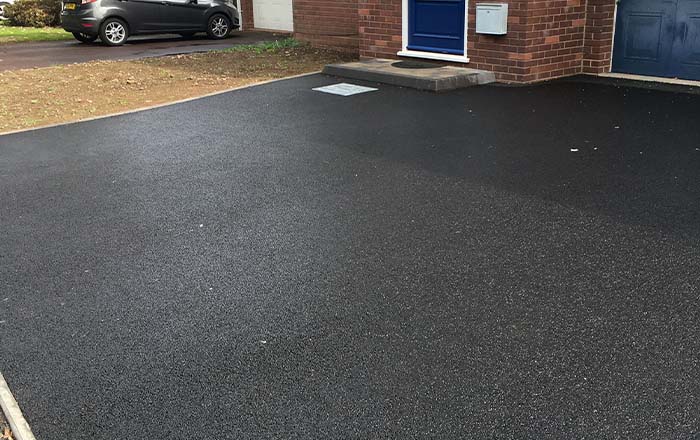
Thinking about a new driveway for your Wolverhampton home? This guide walks you through everything you need to know about tarmac driveways, including the honest pros, the real cons, and what you’ll actually pay in 2026. Tarmac remains one of the most popular driveway choices across the West Midlands, and it’s easy to see why: it’s tough, quick to lay, and won’t break the bank. That said, it isn’t right for every home or every budget.
By the end of this article, you’ll know whether tarmac suits your property and your style. Right Choice Surfacing has installed driveways across Wolverhampton, Telford, Shrewsbury, and Stafford for years, so we’ve seen first-hand what works and what doesn’t.
What Is a Tarmac Driveway? (Tarmac vs Tarmacadam)
Tarmac gets its name from tarmacadam, a mix of tar and crushed stone first used on British roads over a century ago. Modern driveways don’t actually use tar anymore. Instead, installers mix bitumen, a sticky substance made from crude oil, with graded stone chippings to create what’s technically called asphalt, or “bitmac.” Most people still call it tarmac though, so we’ll use that term throughout this guide.
What does this mean for your driveway in practice? Today’s tarmac is far more flexible and weather-resistant than the old tar-based surfaces. It copes with British rain, frost, and the odd heatwave much better, which is one reason it has stayed popular for so long.
How Much Does a Tarmac Driveway Cost in Wolverhampton?
Price is usually the first question homeowners ask, so let’s get straight into it. Across Wolverhampton, a standard tarmac driveway typically costs between £45 and £100 per square metre. The final figure depends on your existing surface, your ground conditions, and the overall size of the job. Smaller driveways often cost more per square metre because certain costs, such as site setup and machinery access, stay roughly the same no matter how big or small the area is.
Real Cost Examples for Wolverhampton Driveways
Here’s a rough idea of what you might pay, based on typical Wolverhampton jobs:
- Small driveway (around 20m²): approximately £900–£2,000
- Medium driveway (around 40m²): approximately £1,800–£4,000
- Large driveway (around 60m²): approximately £2,700–£6,000
These figures cover a standard installation. Curved edges, steep slopes, or a full dig-out of an old surface will push the price higher.
What Affects Your Tarmac Driveway Price
A few factors decide where you’ll land within that price range:
- The depth and quality of the sub-base, which affects long-term durability
- How easily machinery can access your driveway
- Whether an old surface needs breaking up and removing first
- The slope of your driveway and any drainage requirements
- Edging choices, such as brick or kerb stone borders
Extra Costs to Budget For
Don’t forget to factor in a few extras that catch people out:
- Dropped kerb fees, if you need one installed or altered
- Council permission costs, where applicable
- Coloured or dyed tarmac, which costs more than the standard black finish
- Skip hire for waste removal
The Pros of a Tarmac Driveway
Tarmac earns its popularity for good reason. Here’s what homeowners in Wolverhampton like most about it:
- Affordable: it costs less per square metre than resin, block paving, or imprinted concrete.
- Quick installation: most driveways are laid and ready to use within a day or two.
- Durable: with a properly built sub-base, tarmac lasts 15 to 25 years.
- Low maintenance: you won’t need to reseal or repair it anywhere near as often as concrete.
- Weather-resistant: it copes well with the West Midlands’ mix of rain, frost, and summer sun.
The Cons of a Tarmac Driveway
However, tarmac isn’t perfect, and it’s worth knowing where it falls short before you commit.
- Limited design options: you won’t get the decorative patterns or colour range that resin or block paving offer.
- Can soften in extreme heat: heavy vehicles or motorbike stands can leave marks during hot spells.
- Weed and crack risk: without sealing, weeds can push through small cracks over time.
- Staining: oil and fuel spills can damage the surface if left untreated.
- Needs periodic resealing: to keep it looking sharp and to extend its lifespan.
Tarmac vs Resin vs Block Paving: Which Suits Your Wolverhampton Home?
If you’re torn between surfaces, this quick comparison should help.
| Feature | Tarmac | Resin-Bound | Block Paving |
| Cost per m² | £45–£100 | £70–£120 | £60–£100 |
| Lifespan | 15–25 years | 20–25 years | 20+ years |
| Maintenance | Low | Very low | Moderate |
| Design flexibility | Limited | High | High |
| Best for | Budget, speed, high traffic | Kerb appeal, period homes | Classic, patterned finishes |
Tarmac wins when speed and budget matter most, especially for busy family driveways. On the other hand, if you want a decorative finish that boosts kerb appeal, our resin driveways or block paving options might suit you better. It’s worth weighing up your priorities before deciding.
Do You Need Planning Permission for a Tarmac Driveway in Wolverhampton?
In most cases, no. If your driveway is under 5m² and uses a permeable surface, you generally won’t need planning permission. Problems arise once you go over that size with a non-permeable material like standard tarmac and water can’t drain away naturally on your property.
You’ll also need to check with City of Wolverhampton Council if any of the following apply to your home:
- Your property sits on a classified road, such as an A or B road.
- You live in a conservation area or a listed building.
- You need a new or altered dropped kerb to access the driveway.
- Your drainage setup doesn’t meet current Sustainable Drainage System (SuDS) requirements.
This can sound confusing, so a good installer will check these details for you before work begins. At Right Choice Surfacing, we handle these checks as part of your free survey, so you don’t have to navigate council rules alone.
How We Install a Tarmac Driveway, Step by Step
Curious what actually happens on installation day? Here’s the typical process:
- Free site survey and quote. We measure your driveway and talk through your options, usually within half an hour.
- Excavation and sub-base preparation. This step matters more than any other, since a solid sub-base is what makes tarmac last for decades rather than years.
- Laying and compacting the tarmac. We spread the hot mix evenly and compact it to the right density.
- Edging and finishing. Kerb stones or brick edging get added at this stage, along with any drainage channels.
- Curing time. You can usually walk on your new driveway the same day, though we recommend avoiding heavy vehicles for the first couple of days.
How to Make Your Tarmac Driveway Last Longer
A little upkeep goes a long way with tarmac. Try these habits:
- Reseal the surface every few years to guard against water damage and cracking.
- Clear weeds as soon as you spot them, before roots spread.
- Wipe up oil or fuel spills quickly, since they can soften the surface.
- Avoid parking heavy vehicles in the exact same spot every day.
Does a Tarmac Driveway Add Value to Your Home?
Yes, in most cases. A tidy, well-laid driveway improves kerb appeal, and estate agents often mention it as a feature that helps a property sell faster. Furthermore, a fresh tarmac surface signals to buyers that the property has been cared for, which matters more than people expect during a viewing.
Why Local Knowledge Matters for Wolverhampton Driveways
Wolverhampton isn’t one uniform patch of ground, and that matters more than most homeowners realise. Areas like Tettenhall and Penn often sit on heavier clay soil, which can shift slightly with the seasons and put pressure on a poorly built sub-base. Meanwhile, older Victorian terraces around Compton and Bilston sometimes have tight access, which affects how machinery gets in and how we price the job.
An installer who works across WV postcodes day in and day out will spot these issues during the survey, not halfway through the job. Wednesfield properties, for example, often need extra attention to drainage because of how close some driveways sit to the road. Local knowledge like this doesn’t cost you anything extra, but it does protect your investment for the next twenty years.
Choosing the Right Tarmac Driveway Installer in Wolverhampton
Not every installer works to the same standard, so ask a few questions before you book anyone:
- Do they offer a written guarantee on the sub-base and surface?
- Are they fully insured, and can they show proof?
- Do they have experience with Wolverhampton properties specifically, including older terraces and clay-heavy soil?
- Will they handle planning and dropped kerb checks for you?
Right Choice Surfacing covers all of the above. As the leading local provider of driveways across Telford, Shrewsbury, Stafford, and Wolverhampton, we hold liability insurance of up to £2,000,000 for your peace of mind. We also skip the pushy sales calls. Instead, we visit your home, show you samples, and leave you to make the decision in your own time.
Is a Tarmac Driveway Right for You?
Tarmac offers a strong balance of cost, speed, and durability, which explains why so many Wolverhampton homeowners choose it. It won’t give you the decorative flair of resin or block paving, but it will give you a reliable, low-maintenance surface that copes well with daily life. If your priority is a driveway that looks smart without draining your budget, tarmac deserves a serious look.
Ready to find out what your driveway will cost? Get in touch with Right Choice Surfacing today for a free, no-obligation quote and survey. We’ll measure your space, talk through your options, and give you a straight answer with no pressure attached.
Frequently Asked Questions
Can you lay tarmac over an existing driveway?
Often, yes. If your current surface is stable and free of major cracks, we can lay a fresh tarmac layer straight on top. However, if the base is crumbling or uneven, a full dig-out gives better long-term results.
Is a tarmac driveway eco-friendly?
Standard tarmac isn’t permeable, so rainwater runs off rather than soaking in. That said, permeable tarmac options exist, and they help meet SuDS drainage rules while still giving you the same durable finish.
What’s the best time of year to lay a tarmac driveway?
Mild, dry weather works best, which usually means spring or autumn in the West Midlands. Extreme heat or frost can affect how well the tarmac settles, so avoid the height of summer or the depths of winter if you can.
How soon can I park on a new tarmac driveway?
You can typically walk on it the same day. For vehicles, we recommend waiting at least two to three days to let the surface fully harden, especially in warmer weather.
Is tarmac or resin better for a Wolverhampton driveway?
It depends on your priorities. Tarmac suits homeowners who want a durable, budget-friendly surface installed quickly. Resin suits those who want a more decorative finish and don’t mind paying more for it.